
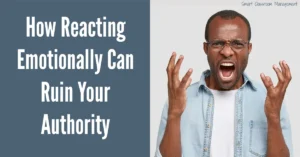
One of the biggest mistakes a teacher can make is to have an emotional reaction to misbehavior.
This can play out in a number of ways.
- Glaring
- Lecturing
- Arguing
- Berating
- Brooding
- Grumbling
- Threatening
- Scowling
- Pacing
- Using sarcasm
In other words, you show displeasure in front of your class. This can ruin your authority because . . .
It’s weak.
Like it or not, if your mood and behavior can be swayed by misbehavior, it communicates to your students that you’re not a strong leader.
Even the youngest students can recognize that outward signs of inner fragility prove that they can get under your skin and knock you off your center.
It’s small.
Lowering yourself to a misbehaving student’s level by battling with them or showing how they hurt your feelings makes you appear petty.
It shows immaturity and insignificance—which are the opposite of strong authority—especially compared to a teacher who can keep their cool despite things not going their way.
It’s inconsistent.
You promised to follow your classroom management plan as written. Period. If you lecture or admonish instead, or even in addition to, you’re going back on your word.
You’re being inconsistent, which always increases bad behavior and resentment and weakens leadership and authority.
It’s off-putting.
To have authority in the classroom you must be likable. Students must admire and look up to you as someone worth following.
Losing emotional control even once drops you down a few notches. It’s an unattractive look that will cause less respect for you and less influence over their behavior.
Dirty Work
Whenever authority drops, misbehavior increases. Your lack of emotional control gives students a green light to see how far they can push you off your game.
The solution is to allow your classroom management plan to do your dirty work for you. Let it handle all misbehavior. Wash your hands of the responsibility.
Your only job is to follow it.
In time and with consistency, the urge to react will go away. The result is that your authority will rise and your students will view you as a leader worth following.
PS – Check out this week’s YouTube videos:
1. Why Students Get Worse When You Try to Help
2. How to Get Students to Care About Consequences
3. How to Stop Repeating Yourself All Day
Also, if you haven’t done so already, join us. It’s free! Click here and begin receiving classroom management articles like this one in your email box every week.